MeNext / Tiling
The first tile decides where the last one lands.
Setting out is the whole job. Everything after it is just care and clean grout lines.
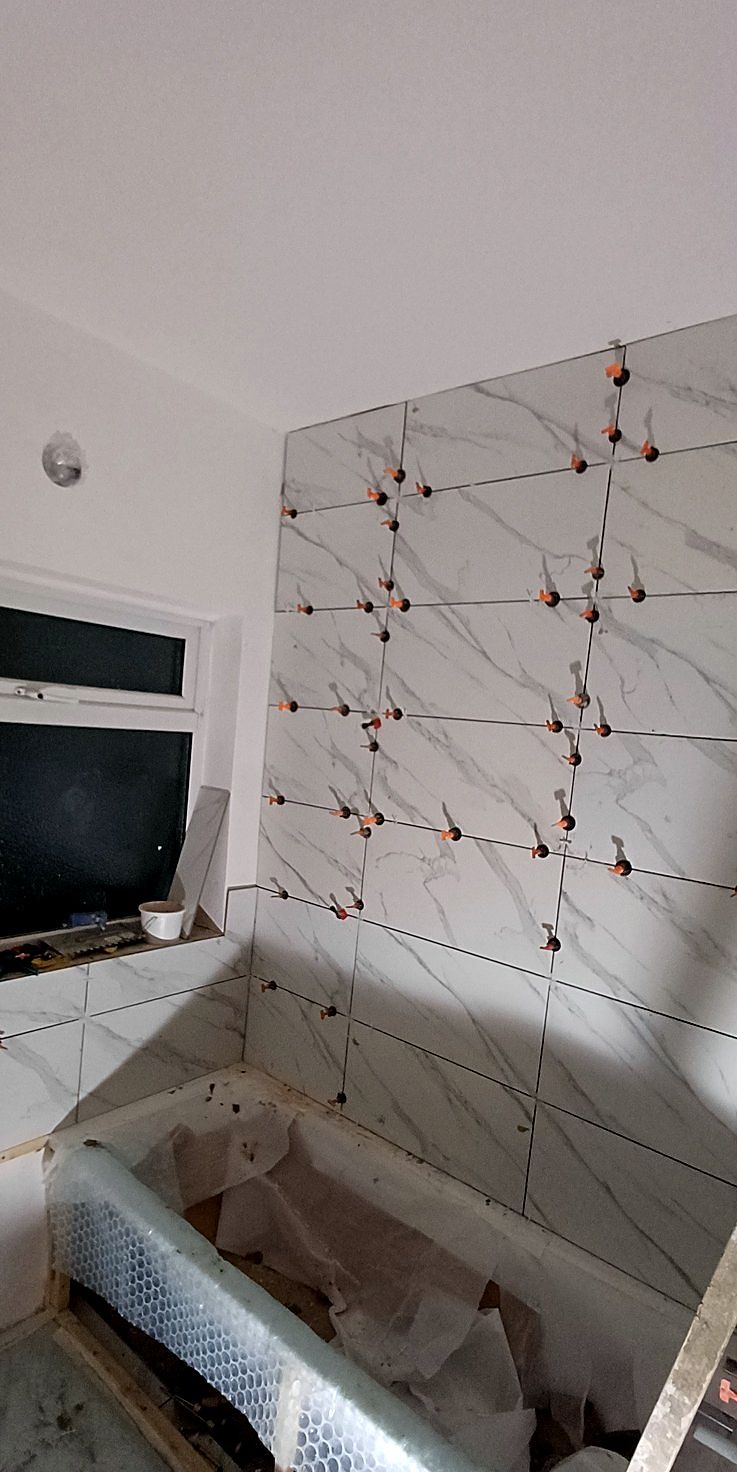
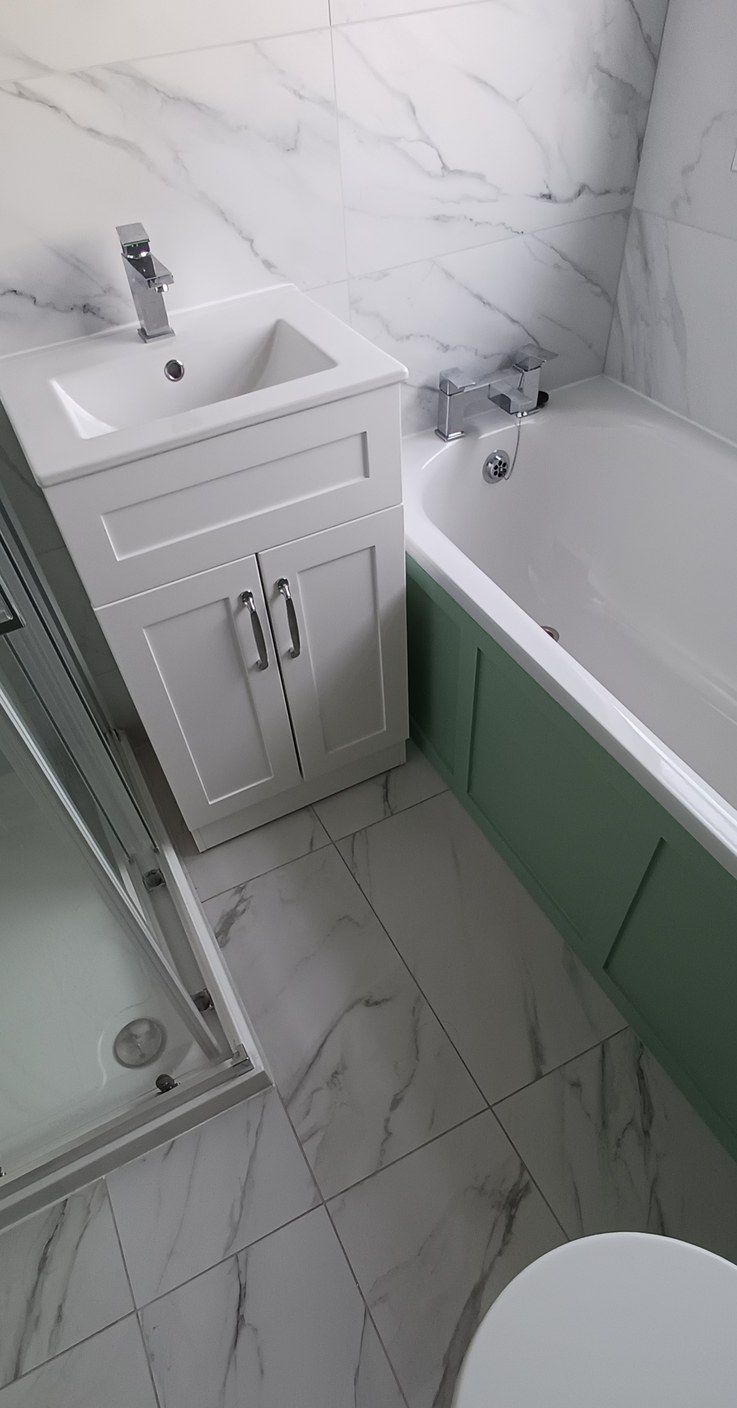
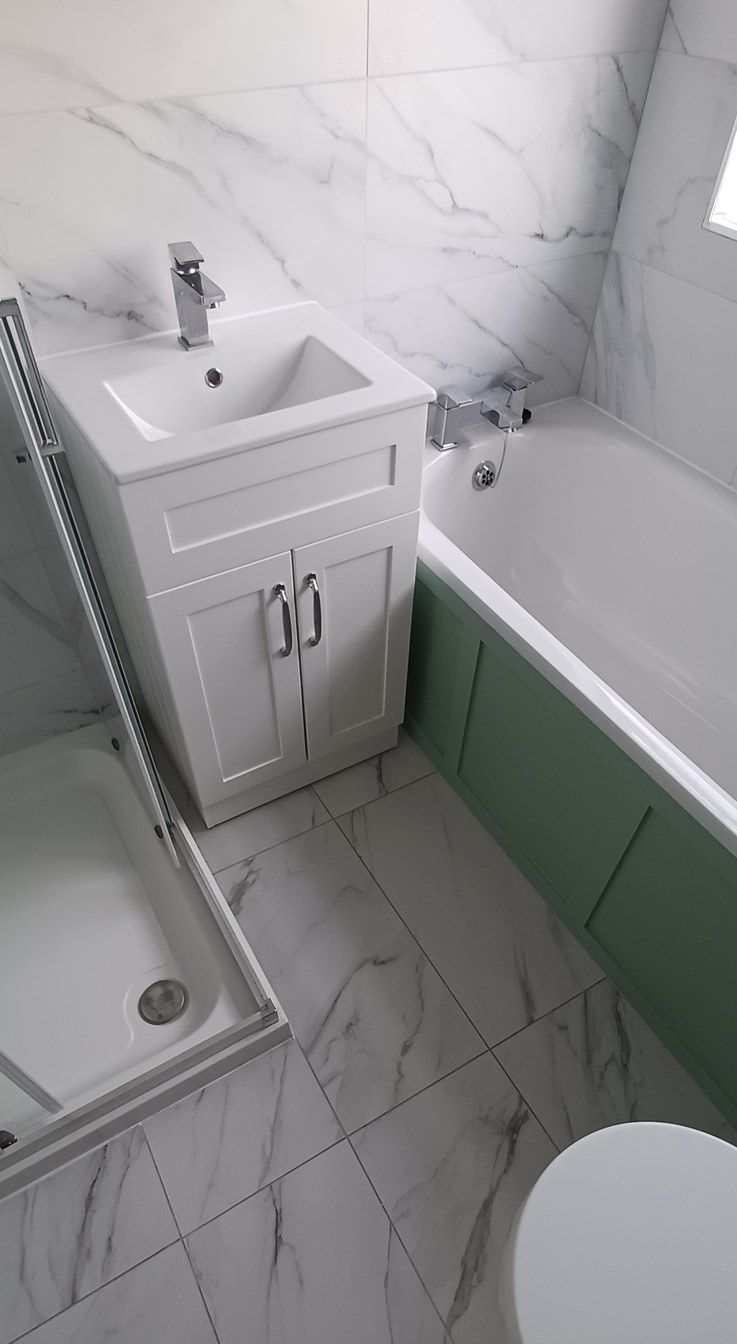
Most people looking at a finished bathroom cannot say why one looks right and another looks slightly wrong. It is nearly always the setting out.
Here is the thing nobody tells you. If you start tiling from the corner you happen to be standing next to, the wall decides where you finish, and walls are not on your side. You end on a two-centimetre sliver of tile at the most visible corner in the room, or a full tile at the bottom and a mean little strip at the ceiling, or a cut running straight through the middle of where the shower valve goes. None of it can be fixed afterwards. It is all decided by where the first tile went.
So before any adhesive comes out, I work out where the cuts are going to fall and I put them where nobody looks — behind the door, into a corner, under the vanity. The full tiles go where the eye lands. In a bathroom that usually means the wall you see from the doorway and the wall behind the bath. On a floor it means the run you walk in along.
The other half of the job is the surface underneath. Tiles laid on a floor that flexes will open at the joints within a year, and no amount of skill in the laying prevents it, because the problem is not the tile. So floors get lifted, levelled and screwed down before anything else happens. Large-format tiles are worse for this than small ones, and large format is what most people want now.
I use levelling clips through the whole job. They cost a little more and take longer, and what they buy you is that no edge stands proud of the one next to it. You cannot see this straight on. You see it when the light comes across the wall from a window in the morning, which is when a bathroom is most looked at.
What I tile: bathrooms, shower rooms, wet rooms and cloakrooms, floors and walls, large-format porcelain, stone effect, marble effect and patterned. Kitchen floors and splashbacks. Cutting around pipes, valves and awkward corners, which is most of what the time actually goes on.
Start in the corner you happen to be standing next to, and the wall decides where you finish.
How the job runs
- Check the surface first — a floor that moves or a wall that is not sound is a tiling failure waiting to happen, whatever goes on top of it.
- Make it flat and solid — lifting, levelling, screwing down, boarding out. This is the part that decides whether the job lasts.
- Set out dry — I work out where every cut falls before any adhesive is mixed, and put the cuts where nobody looks.
- Lay to the setting out — full tiles on the walls you see, levelling clips throughout so no edge stands proud.
- Cut around the awkward things — pipes, valves, sockets, corners. This is where the hours actually go.
- Grout and seal — including the movement joints and silicone lines that stop a rigid floor cracking a rigid tile.
What goes wrong
A bad tiling job announces itself in three ways and all three are permanent. Poor setting out gives you slivers at the corners and a cut running through the wrong place, which cannot be corrected without taking the wall off. Lippage, where one tile edge stands proud of its neighbour, is invisible head on and glaring in raking light — and it catches a mop and a bare foot for as long as the room exists. And tiles laid on a floor that was never stabilised will crack or lift along a line, usually within the first winter of the heating going on and off. All three cost the same to put right: the whole room again, plus taking out the one you paid for.
Questions people ask
Why does where you start matter?
Because it decides where you finish. Start in the nearest corner and the wall decides, and you end on a sliver of tile at the most visible corner in the room. I set the cuts out before any adhesive is mixed and put them where nobody looks.
What are the little clips for?
Levelling clips. They stop one tile edge standing proud of the one beside it. You cannot see the difference straight on — you see it when morning light comes across the wall.
Can you tile over my existing floor?
Only if it does not move. Tiles laid on a floor that flexes will crack along a line within a year, and that is not a fault in the tile. If it needs stabilising first I will say so.
Do you do large format tiles?
Yes. They are less forgiving than small ones because any unevenness underneath shows at the joints, so the preparation matters more, not less.
If you are planning a bathroom or a floor and want it set out properly rather than started in the nearest corner, I will come and look at the room. Call Andrew on the number at the top of this page.