MeNext / Flooring
A beautiful floor laid on a bad one is a beautiful floor for a year.
What goes underneath decides how long what goes on top survives. It is the least interesting part of the job and the only part that determines the outcome.
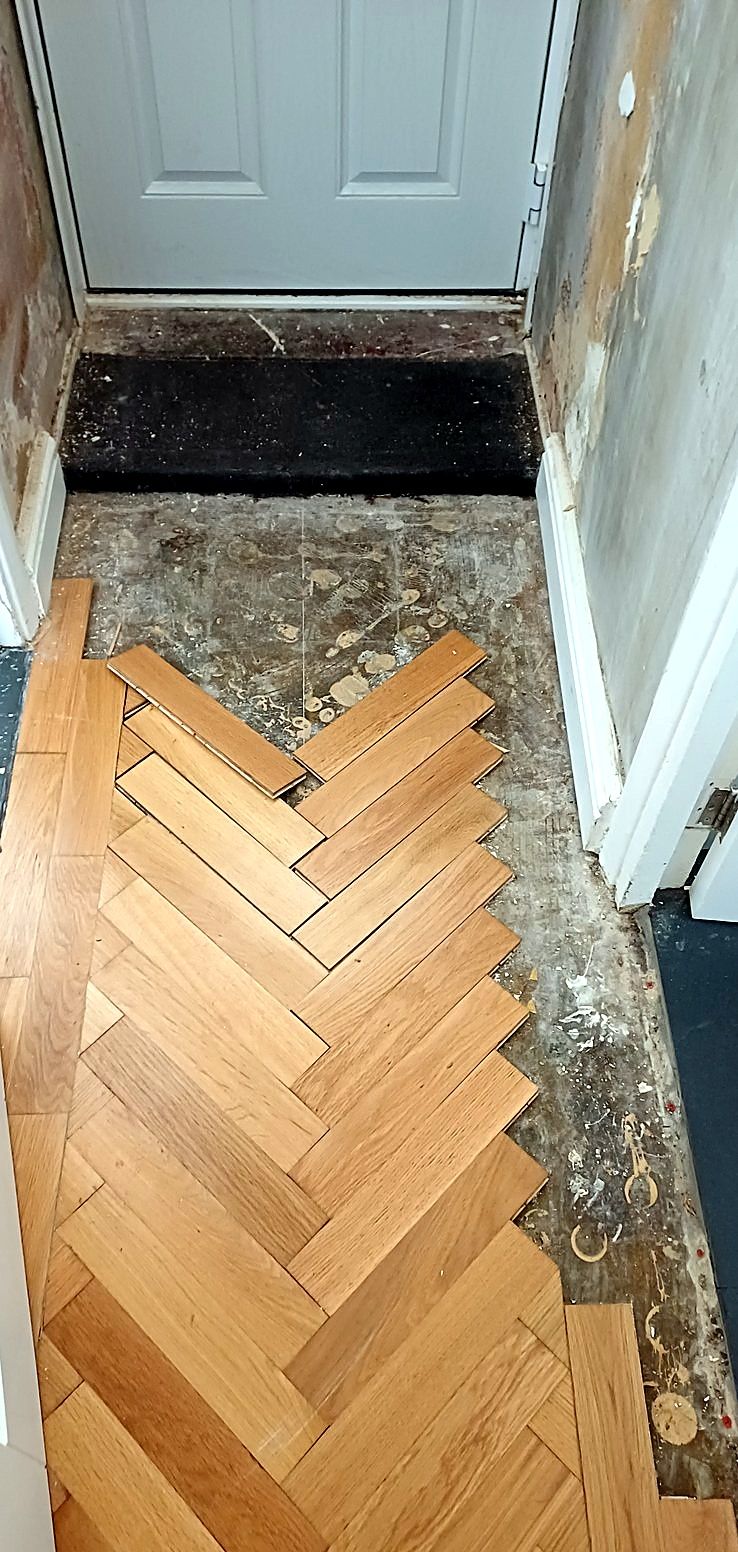
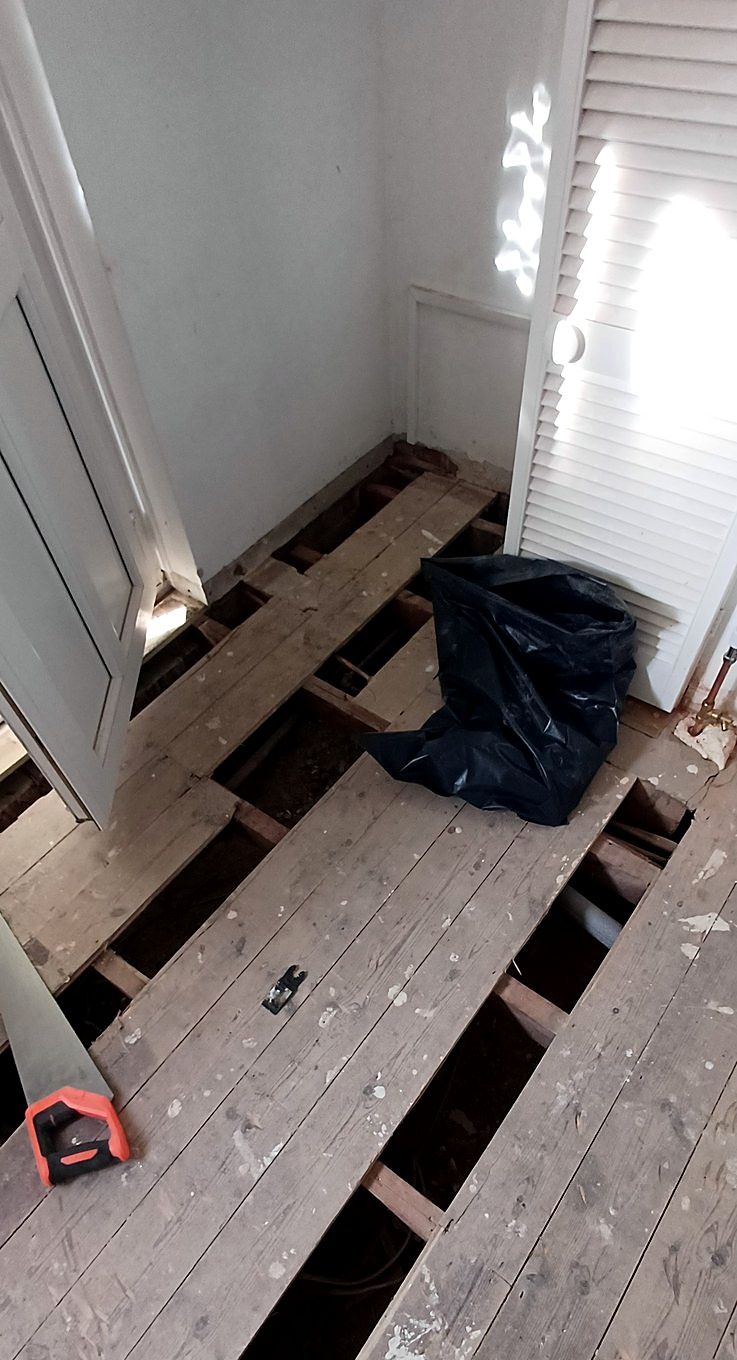
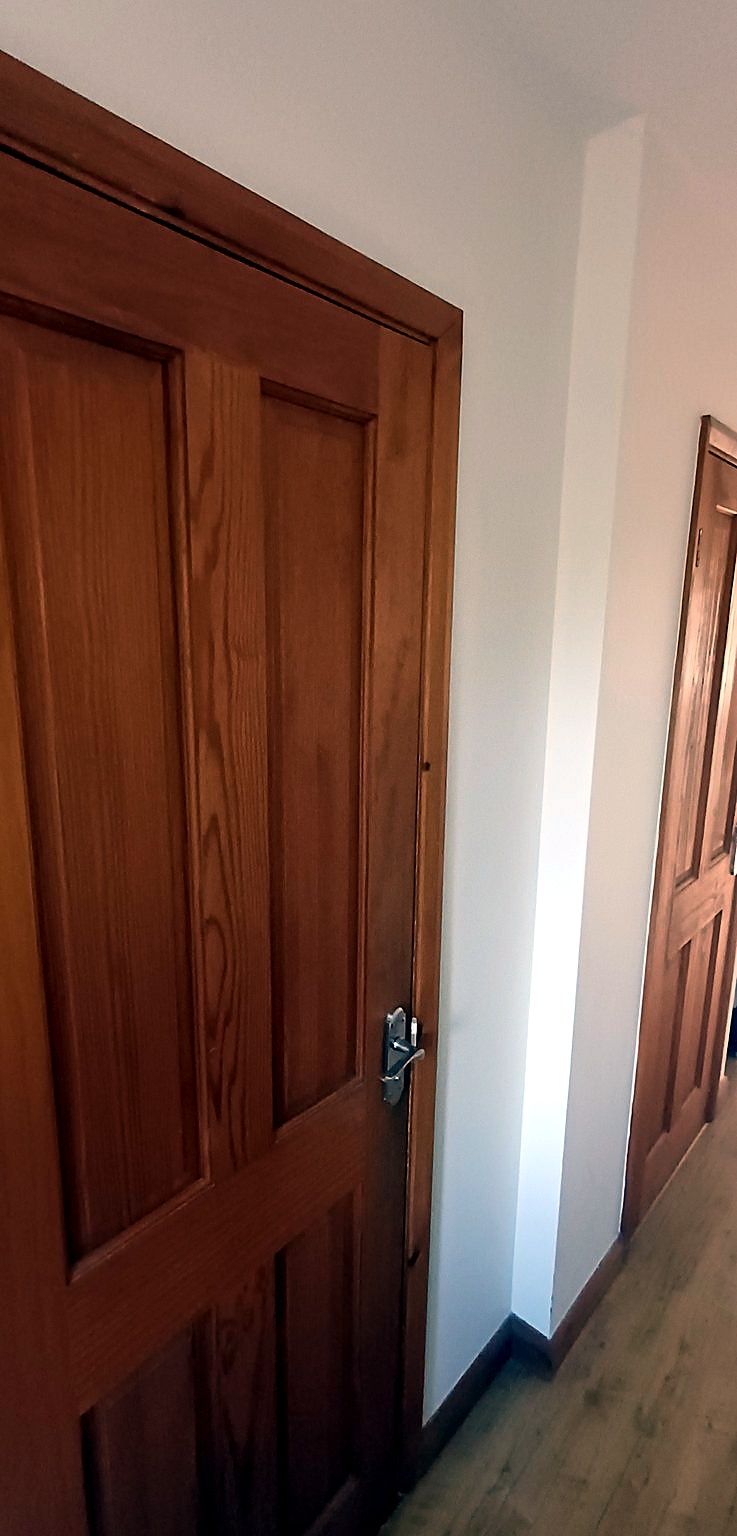
Herringbone is the one people ask for now. It is worth having and it is unforgiving, because every single piece is at an angle to the one beside it, and an error of a millimetre does not stay a millimetre. By the time you have crossed a room it is a gap you can put a coin in.
So herringbone is set out from the centre line of the room, not from a wall. This surprises people. It seems obvious to start at the edge you can see. But the walls in the houses I work in are not straight and are certainly not square to each other, and if you set out from one of them you carry its error across the whole floor and deposit it at the far side, where the sunlight comes in and where everybody looks. Centre line means the error gets split in half and pushed into two edges, under the skirting, where nobody will ever meet it.
Before any of that, the floor underneath has to stop moving. Original boards in a South East London house are rarely flat and often are not fixed down as well as they were in 1910. So they get lifted where they need lifting, anything soft gets replaced, pipe runs get checked and clipped, and then a plywood subfloor goes down over the top, cut in and screwed at close centres. Screwed, not nailed. Nails work loose and a floor that creaks was a floor that was nailed.
That subfloor is the whole job. If it is flat and solid, almost any finish will last. If it flexes, then engineered board will gap at the joints, laminate will click apart at the ends, tile will crack in a line, and parquet will lift at the corners. None of that is a fault in the material and none of it can be repaired from above.
What I lay: herringbone and engineered wood, laminate, plywood and boarded subfloors, and floors taken up and put back over new pipework. I also lay insulation between joists while the floor is open, because that is the only time it is cheap to do and the difference through a winter is noticeable.
An error of a millimetre does not stay a millimetre. By the time you have crossed a room it is a gap you can put a coin in.
How the job runs
- Find out what is under there — boards, joists, concrete, or something previously patched. It sets everything.
- Lift where lifting is needed — soft timber replaced, pipe runs checked and clipped so nothing ticks under a new floor.
- Insulate while it is open — a few hours now, or a floor lifted again later.
- Lay and screw the subfloor — plywood, cut in, screwed at close centres. Screwed, never nailed.
- Set out from the centre — especially herringbone, so the walls' errors go under the skirting.
- Lay, then finish and trim — thresholds, beading and skirting last, so the floor can move as it should.
What goes wrong
Almost every failed floor I am called to is a subfloor problem wearing a different coat. Boards gap at the joints, laminate clicks apart along a walking line, tiles crack in a straight run across a room, parquet lifts at a corner. In every case the owner assumes the material was poor, and in almost every case the material was fine and the thing underneath it was moving. The other one is fitting a floor tight to the walls with no expansion gap. Timber moves with the seasons whether or not you allow for it, and a floor with nowhere to go will lift in the middle of a room, usually in the first warm damp spell after it is laid.
Questions people ask
Do you lay herringbone?
Yes. It is set out from the centre line of the room rather than from a wall, because the walls in these houses are not square, and setting out from one carries its error across the whole floor.
Why do you put plywood down first?
Because the subfloor decides how long the finish lasts. If it is flat and solid almost anything will last. If it flexes, boards gap, laminate clicks apart and tile cracks in a line — and none of it can be repaired from above.
My floor creaks. Can that be fixed?
Usually. A floor that creaks was generally nailed rather than screwed, or has boards that have worked loose over pipe runs. Both are fixable while the floor is up.
Can you insulate while the floor is open?
Yes, and that is the only cheap moment to do it. It is a few hours then, or a floor lifted again later.
If a floor is moving, creaking, or you are thinking about herringbone and want it set out properly, I will come and look at what is under the one you have. Call Andrew on the number at the top of this page.